Dumpster rental dispatch and billing software.
The business ran on a whiteboard, a spreadsheet and a phone.
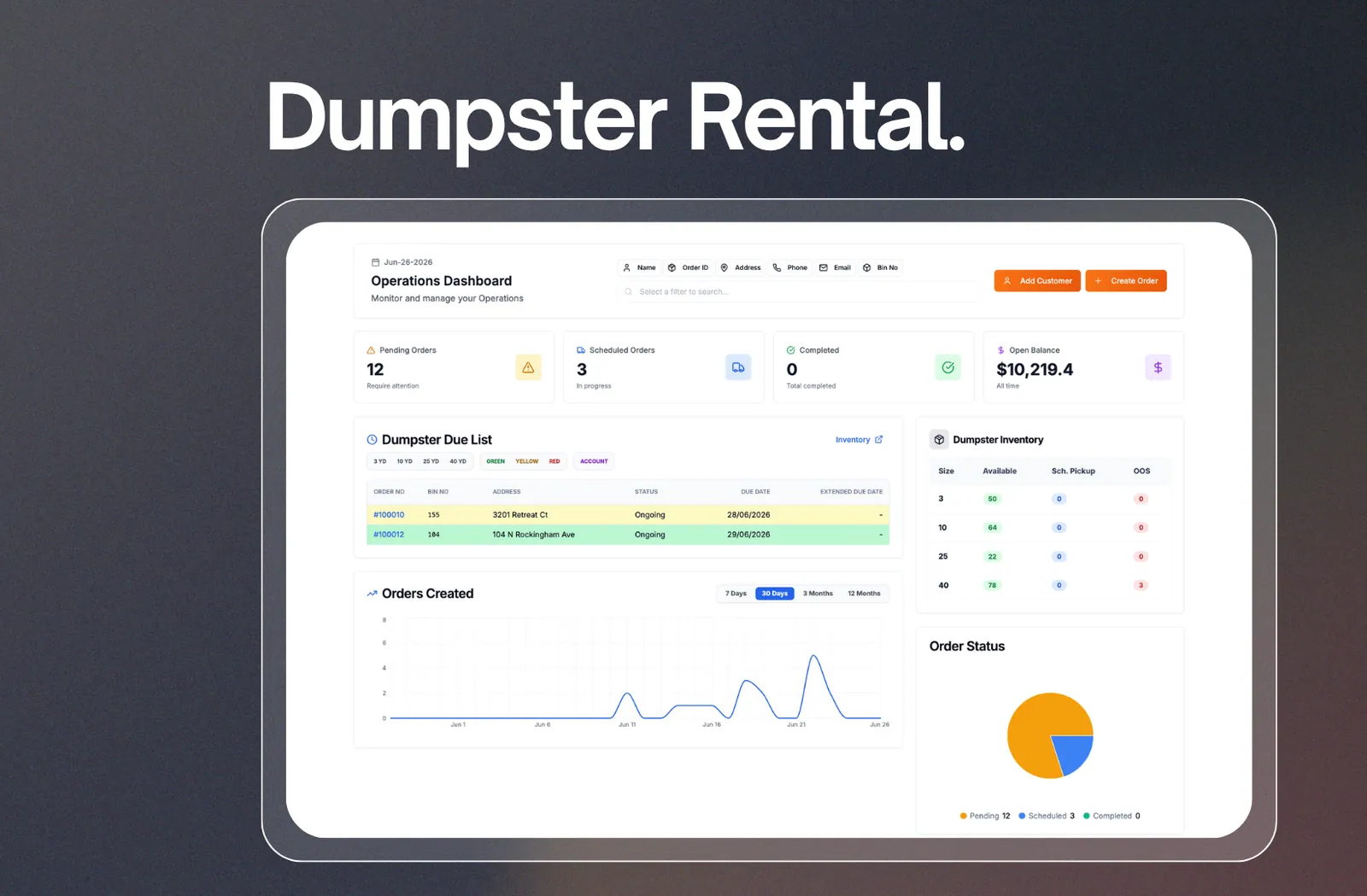
A live operations dashboard giving dispatchers one view of active jobs, revenue and roll-off container inventory.
Dumpster Rental System
The business ran on a whiteboard, a spreadsheet and a phone. Orders came in by call, got written down, and were reconciled against invoices days later. We replaced all of it with one operations platform. A drag-and-drop dispatch board shows the whole day of roll-off deliveries and pickups across every truck. Order creation prices a job from tonnage, service zone and extras before it is confirmed, so the number on the invoice is the number the customer was quoted. A searchable customer and vendor CRM sits underneath, and invoices are raised automatically the moment a job is marked complete. Status notifications go out as jobs move, so the dispatcher stops fielding calls asking where the truck is. Dispatching a job used to mean a phone call to a driver and a line written on the board, about ten minutes each time. It takes under a minute now, and the board that needed three people to run takes one. What it did not change is how fast invoices go out, because that was never waiting on the software. Built in React, Node.js, Express and Supabase, with Pusher driving the live updates, and running in production for a dumpster rental and waste logistics operator.
Operations Dashboard
The central dashboard gives staff a live overview of the business: pending, scheduled, and completed orders, total revenue, monthly order volume, and real-time dumpster inventory by size, all in one view, with quick search and customer or order creation built in.
Create Order
A guided order creation flow that captures the customer, job address, dumpster size, service zone, and delivery window, then calculates pricing automatically from tonnage, zone fees, and any additional charges before the order is confirmed.
Driver Dispatch Board
A drag-and-drop dispatch board where unassigned pickup and delivery orders are scheduled directly onto trucks and time slots, giving dispatchers a live, day-by-day view of the full fleet schedule.
Orders List
A complete, searchable view of every order with customer, size, price, service type, delivery or pickup date, and both order and payment status, so staff can track the full lifecycle of every job at a glance.
System Settings
A configuration panel for the business itself: dumpster sizes and tonnage, pricing, service zones, placement options, time slots, service types, and materials, letting the operator tailor the platform to their exact workflow without a developer.
Built, shipped, and running.
Running something like this on a spreadsheet?
Tell us what it has to do and when it needs to be live. You’ll get back the architecture we’d use, the trade-offs, and a realistic timeline.