An AI presentation coach built on computer vision.
Orator AI watches a recording of someone presenting and tells them how it went.
An AI coaching product that turns a raw presentation recording into a detailed, timestamped performance report, backed by a fully automated cloud deployment.
Orator AI
Orator AI watches a recording of someone presenting and tells them how it went. You record in the browser or upload a video, and the report that comes back covers what you said and how you said it: a transcript, delivery scores, gesture and posture detection, and a timestamped breakdown you can scrub through. The analysis runs on a microservices backend built with Django REST Framework, MediaPipe and custom-trained models. We built the production infrastructure around it as well. Docker on EC2 inside a VPC, RDS behind it, the React frontend on CloudFront and S3, and a GitHub Actions pipeline that ships both halves on every push to main. It is on the site because it is the clearest example of the computer vision and deployment work, rather than because it is a business system.
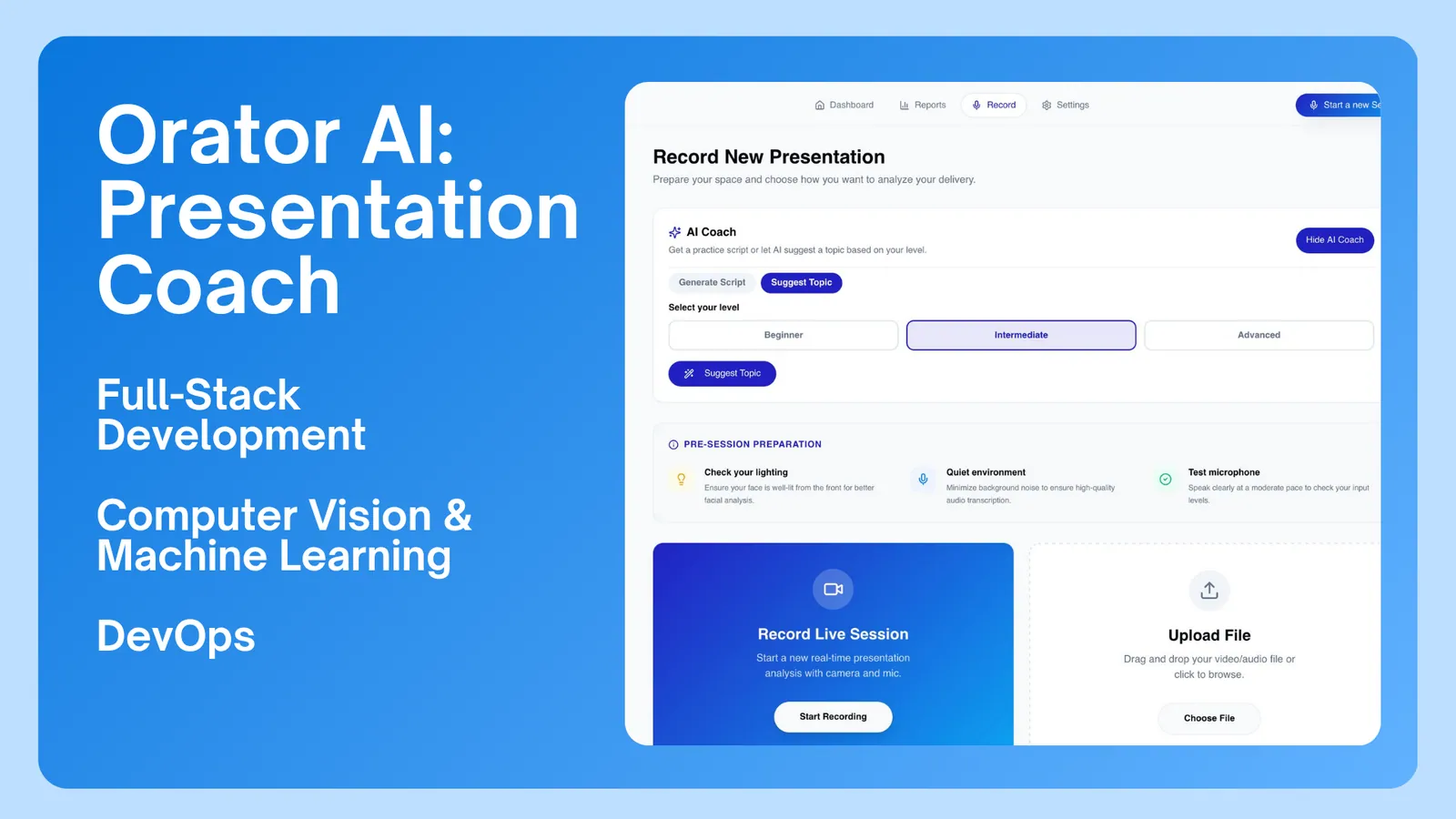
Record a Presentation
Users can record a live session directly in the browser using the MediaRecorder API, or upload an existing video. An optional AI coach can generate a practice script or suggest a topic based on the user's skill level, and pre-session tips help ensure clean audio and video for analysis.
Verbal Analysis Results
The results dashboard scores fluency, clarity, pace, vocabulary richness, and overall delivery, alongside a full transcription and detected accent, giving the user a concrete, numeric breakdown of their speaking performance rather than vague feedback.
Non-Verbal Activity Review
A timeline-based review synced to the recording itself, flagging specific non-verbal events like hands dropping out of frame, brief pauses, or drifting out of the presentation zone, so users can jump straight to the exact moment each issue occurred.
Built, shipped, and running.
Running something like this on a spreadsheet?
Tell us what it has to do and when it needs to be live. You’ll get back the architecture we’d use, the trade-offs, and a realistic timeline.