Weighbridge and scale house software for a recycling yard.
Every load was weighed, written on paper, then typed up and invoiced days later, which is how a yard ends up arguing with a hauler about a ticket from last week.
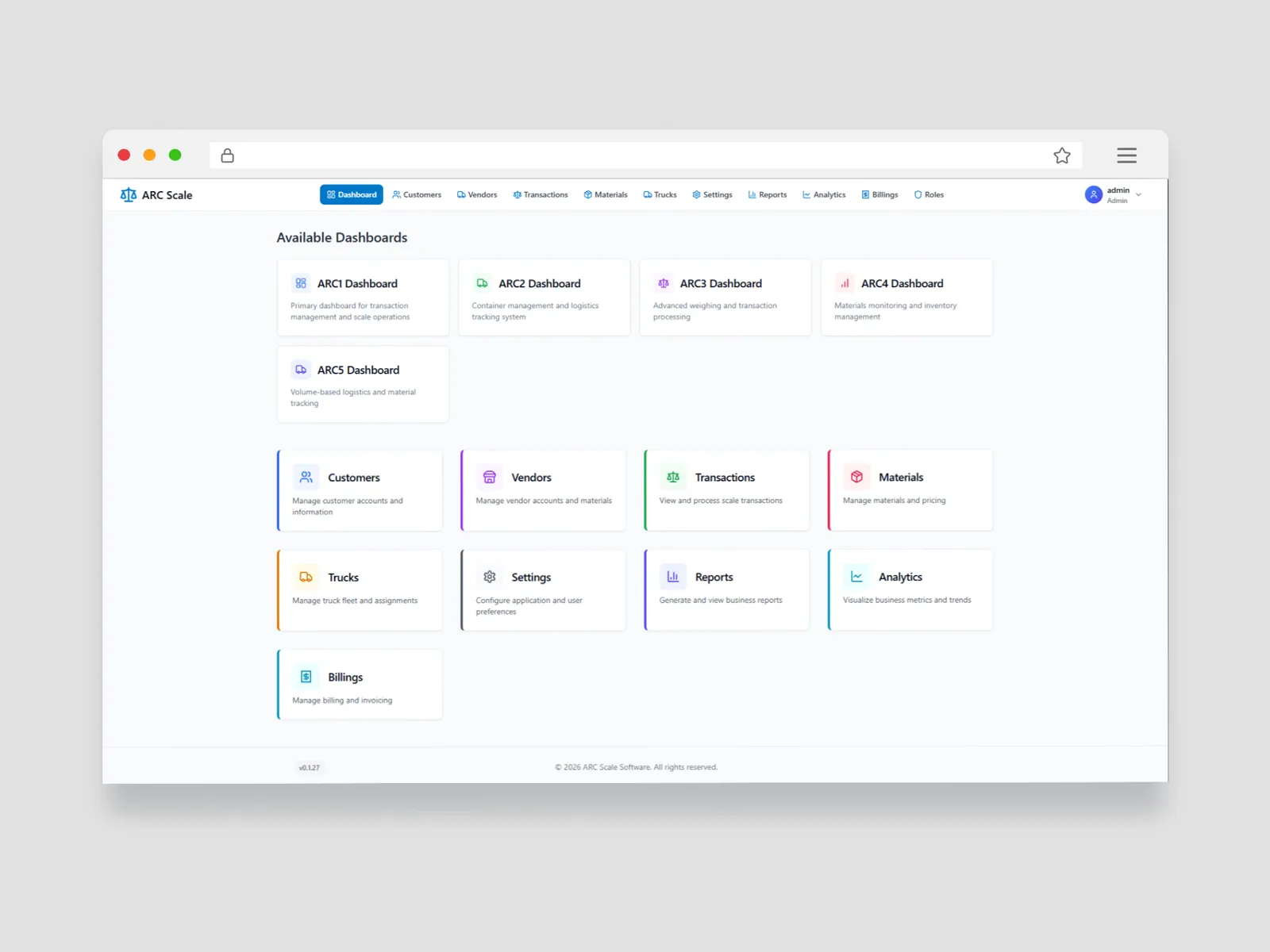
A management console for truck weighing and billing, with real-time scale integration and automated invoicing.
Scalehouse Billing System
Every load was weighed, written on paper, then typed up and invoiced days later, which is how a yard ends up arguing with a hauler about a ticket from last week. We wired the software directly into the weighbridge, so the scale itself supplies the weight and nobody transcribes anything. Incoming loads of waste material and outgoing loads of recycled material run through separate capture, pricing and invoicing flows, each with its own rate structure and charge rules, because they are not the same transaction. The invoice is raised when the job completes rather than at the end of the week. The yard manager gets a live view of what is on the scale and what has moved today, which is something nobody there had before. Reports come out filtered by date, customer, material or driver, and export for compliance.
Dashboard & Realtime Controls
The core operational dashboard provides direct controls for creating new tickets and monitoring active dispatches, with a real-time display of connected weighbridge scales so operators can oversee live weights without leaving the main interface.
Key Features
Customer & Vendor Management
A dedicated CRM section for handling all customer and vendor data. Administrators can add, edit, or delete records, ensuring contacts and company details are always up to date and accessible for ticketing.
Key Features
Report Generation Center
The reports page offers deep insight into operational metrics. Users can build custom templates and generate reports covering ticket volumes, weights, and financial summaries, filterable by date, customer, material, and driver.
Key Features
System Settings
A centralized settings interface controlling the global configuration of the platform, including rate structures, charge rules, and hardware connections, so the system matches the yard's exact billing logic.
Key Features
Built, shipped, and running.
Running something like this on a spreadsheet?
Tell us what it has to do and when it needs to be live. You’ll get back the architecture we’d use, the trade-offs, and a realistic timeline.