A time-tracking and invoicing SaaS with Stripe billing.
A multi-tenant SaaS for freelancers and small teams that tracks billable time and expenses against projects, then turns them into invoices in one step.
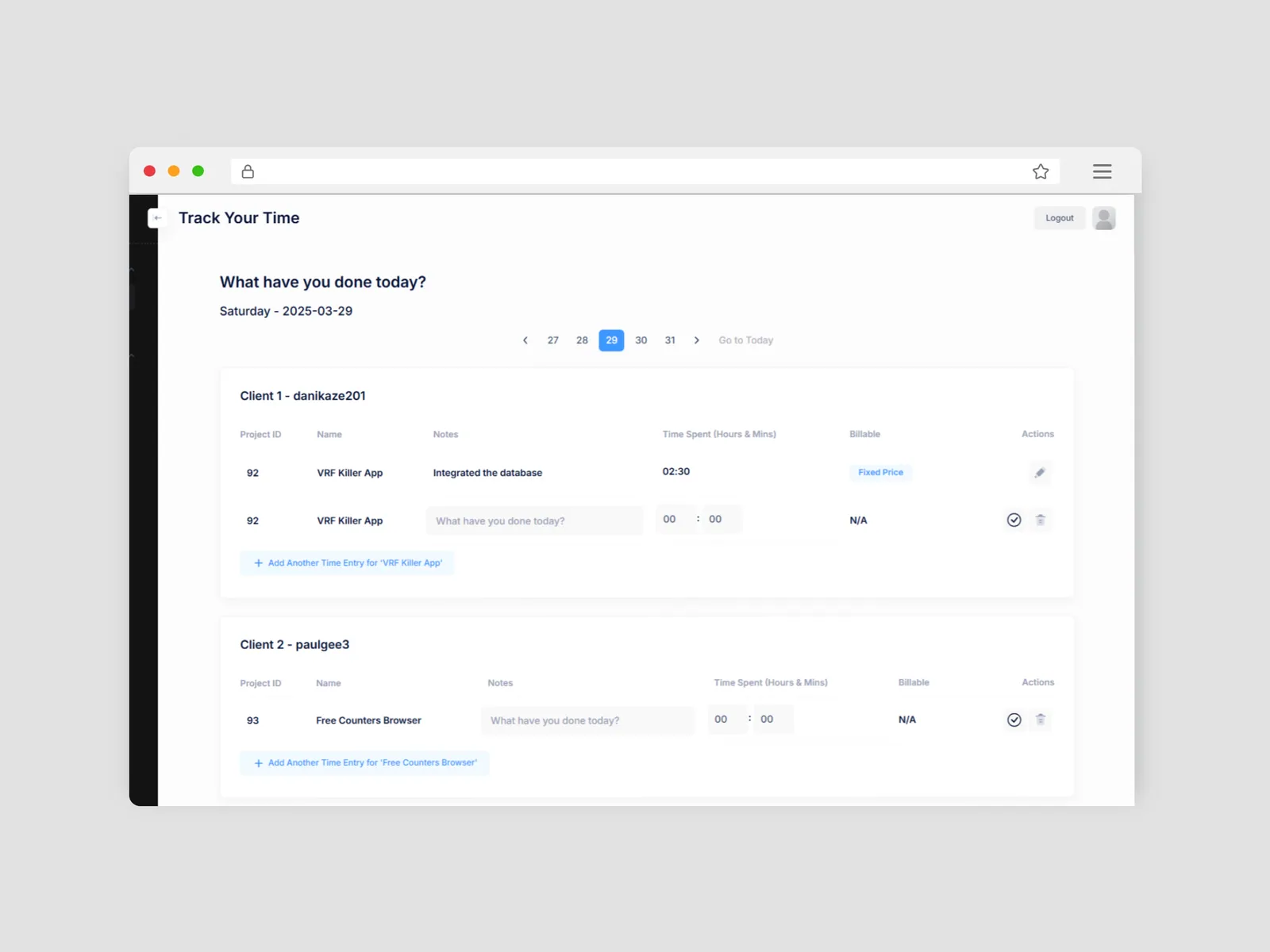
A multi-tenant SaaS dashboard for time, expenses and invoicing, with Stripe subscription billing behind it.
Trackio
A multi-tenant SaaS for freelancers and small teams that tracks billable time and expenses against projects, then turns them into invoices in one step. Each account is its own workspace with its own users and roles, and every query is scoped to that workspace in the data layer rather than by a developer remembering to add a filter. Subscription payments run through Stripe: plan changes, proration on a mid-cycle upgrade, failed charges, and the webhooks that keep the database in step when Stripe and the application disagree. Trackio is a small product, and it is deliberately the clearest example we have of the parts that decide whether a SaaS can safely take its second customer. Tenancy, roles and billing were built before any of the features that sit on top of them, because those three are the expensive things to retrofit once real customers are in the system.
Time and expense tracking
Work sessions and expenses are captured against a project as they happen, rather than reconstructed from memory at the end of the month. Entries carry a rate, a billable flag and a project, which is what makes the invoice step a single action later rather than an evening of arithmetic.
What it does
Invoicing in one step
Unbilled time and expenses for a client roll into a draft invoice that can be reviewed and adjusted before it is sent. The number on the invoice comes from the tracked entries, so there is no second place where the figures live and no reconciliation between the two.
What it does
Built, shipped, and running.
Running something like this on a spreadsheet?
Tell us what it has to do and when it needs to be live. You’ll get back the architecture we’d use, the trade-offs, and a realistic timeline.